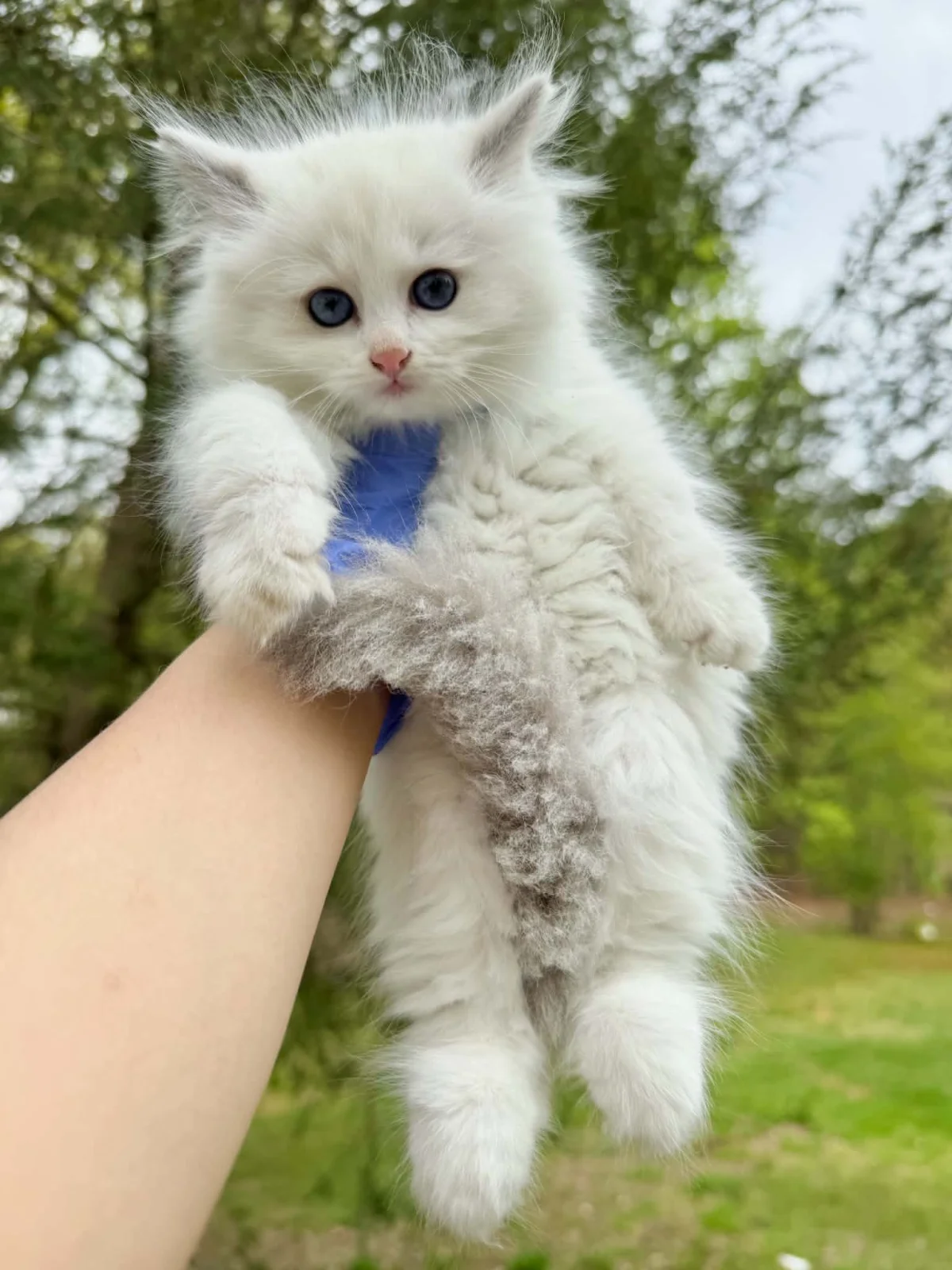
Temperament is personal
Ragdolls are often described as sociable and easygoing, but a breed label cannot tell you everything about one kitten. Ask what the kitten does during an ordinary day: how it approaches people, responds to play, rests, and handles new sounds. Observe a meeting if one can be arranged. The aim is to understand the individual rather than expect a personality promised by a breed description.
Consider the rhythm of your home. Are people away for long stretches? Are there children, other animals, or frequent visitors? A kitten may need a gradual introduction to each part of that life. Ask the breeder about the routines the kitten already knows and what changes may be stressful. If your household is especially busy, discuss how you can create a quiet retreat during the first days.
Apartment living also means shared walls, hallways, elevators, and occasional building work. These sounds may be unfamiliar. A calm arrival plan helps: carry the kitten securely, begin in one prepared room, and give it time to explore at its own pace. Do not force introductions because a schedule says you should. Watch how this kitten responds and ask a veterinarian for advice if you have a health or behavior concern.
Make space in three dimensions
Floor area is only part of a cat’s environment. Stable climbing furniture, window-side resting places, scratchers, and clear routes between rooms can make a small home more interesting. Place perches away from hazards and check that windows and screens are secure. A cat should not have to balance on an unsafe ledge to see outside.
Provide more than one kind of resting place: an open spot where the household gathers and a sheltered area where the kitten can withdraw. Keep food, water, and the litter area arranged so that one cannot block access to another. In a studio, visual separation can help even when walls are not available. A shelf, screen, or furniture arrangement can give each activity its own zone.
If you rent, check your lease and building rules before bringing a kitten home. Confirm any pet paperwork or moving-day requirements with the building directly. This is a practical step, not a reason to assume that all NYC apartments have the same rules. Plan how you will get a carrier into and out of the building without exposing the kitten to an open hallway or street.
Build a manageable play routine
Short, regular play sessions can give a kitten an outlet for curiosity and movement. Try a few safe toys and learn what this kitten enjoys. Put string-like toys away when play ends, and inspect toys for loose pieces. Rotate a small selection rather than filling every corner with equipment. A simple routine that you can keep is more useful than a perfect-looking setup.
Offer scratching surfaces near places where the kitten rests or passes through. Observe whether it prefers a vertical or horizontal surface, then adjust. Give the kitten a chance to succeed before worrying about furniture. Rewarding the use of appropriate surfaces and providing accessible alternatives is more constructive than expecting a new arrival to understand the house immediately.
A window view can be enriching, but outdoor access is a separate decision with real safety considerations. Secure screens and do not assume a balcony is safe simply because it has a railing. If you consider any supervised outdoor setup, discuss it with a veterinarian and follow building rules. Many cats can enjoy indoor life when their needs for activity, choice, and rest are considered.
Litter and grooming basics
Choose a litter area the kitten can reach easily and that you can clean consistently. Ask which litter and box style it has been using, then avoid changing everything on the first day. In a small apartment, ventilation and a predictable cleaning routine matter more than trying to hide the box completely. If there are other cats, ask a veterinarian or a qualified behavior professional about an appropriate number and placement of boxes.
Ragdolls have coats that need regular attention, although the amount varies by cat. Ask what grooming the kitten has experienced and start with brief, gentle sessions. A comb that reaches through the coat, patient handling, and a chance to pause can make grooming easier to accept. Do not pull at mats or use sharp tools close to the skin; ask a professional for help when needed.
Keep a note of the kitten’s current food and feeding schedule. Changes are easier to evaluate when made deliberately rather than all at once. Your veterinarian can advise on nutrition, vaccination timing, parasite prevention, and other medical questions for this individual kitten. A website guide cannot replace that advice or promise any health outcome.
Questions worth asking before homecoming
Ask the breeder about this kitten’s daily temperament, the records available to review, grooming and litter habits, and the expected homecoming date. If parent information or testing matters to you, request the specific documents rather than assuming they exist. Ask what is included, whether there is a written agreement, and how reservation or deposit terms work. Take time to read before committing.
Discuss meeting, pickup, or transport arrangements directly. Share your borough or nearby location, building access constraints, and any timing limits; do not assume a particular service is available until it has been confirmed. If you are not ready to bring a kitten home, say so. A clear conversation can help both sides avoid an unsuitable or rushed placement.
The first week is about learning together. Prepare a quiet starting room, keep essentials easy to find, and let the kitten set a gradual pace. Keep contact details for your veterinarian and the breeder’s written records close at hand. The best apartment plan is not the most elaborate one; it is the one that gives this particular kitten safety, routine, and room to settle.